The Flying Saucer At Sunset

Lenticular clouds (Altocumulus lenticularis) are stationary lens-shaped clouds with a smooth layered appearance that form in the troposphere, usually above mountain ranges. One was spotted in Singapore recently...

Eyes Of 30,000 Honeycombs

With 30,000 individual facets, dragonflies have the most number of facets among insects. Each facet, or ommatidia, creates its own image, and the dragonfly brain has eight pairs of descending visual neurons to compile those thousands of images into one picture...

A Kaleidoscope Of Colours, Shapes And Patterns

Spectacular and innovative in design, the Flower Dome replicates the cool-dry climate of Mediterranean regions like South Africa, California and parts of Spain and Italy. Home to a collection of plants from deserts all over the world, it showcases the adaptations of plants to arid environments...

Lightning Strikes, Not Once, But Many Times

Unlike light, lightning does not travel in a straight line. Instead, it has many branches. These other branches flashed at the same time as the main strike. The branches are actually the step leaders that were connected to the leader that made it to its target...

Are You My Dinner Tonight?

A T-Rex has 24-26 teeth on its upper jaw and 24 more on its lower jaw. Juveniles have small, sharp blade-shaped teeth to cut flesh, whereas adults have huge, blunt, rounded teeth for crushing bones. Is the T-Rex a bone-crushing scavenger?

Showing posts with label Asia. Show all posts

Deforestation - Sichuan's Mountains, Mountains, Mountains

Sichuan, China
March-April 2013

Merlion Wayfarer was recently on a trip to the mountainous regions in Sichuan, China.

Before going there, she didn't know much about Sichuan, other than there are "a lot of mountains" there. It was only during the bus journeys that she grew to appreciate the skills of the drivers there. (Her harrowing experiences are detailed in "Treacherous Mountain Roads - Is Your Life Worth 100 RMB?")

The true nature of Sichuan mountains:
  • Surfaces with vertical drops...
  • Mountain roads with wire meshes holding the loose stones on the cliffs together to protect vehicles travelling on the roads...
  • A lot of evidence of landslides - not just pebbles, but rocks too...
  • Loose shale, a lot of it on the roads...
  • Roads which crumble away into the valleys below...
  • Valleys with fallen rocks and boulders, some changing the path of the flow of rivers...

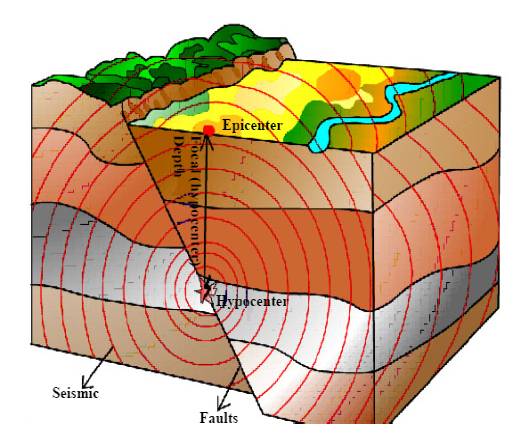
Imagine the resulting devastation from an earthquake in such an area...

(Source : Boston University)

Plate tectonics formed the Longmen Shan Fault, which runs north-easterly under the Sichuan mountains. It is a thrust fault which runs along the base of the Longmen Mountains in Sichuan province in southwestern China. Motion on this fault is responsible for the uplift of the mountains relative to the lowlands of the Sichuan Basin to the east. Both the 2008 Wenchuan earthquake and the 2013 Ya'an earthquake occurred along this fault.

Other than the mountainous terrain and the geological nature of the surface, another reason for the resulting devastation from earthquakes here is due to massive deforestation.  

In many parts of Sichuan, mountains are bare - Clumps of tree stumps dot rocky hills, sticking out like patchy stubble on an otherwise denuded landscape. Deforestation has taken a toll here, leaving local people and an abundance of wildlife increasingly pressed for the resources they need to survive. 


This is a stark contrast to protected regions like the UNESCO sites ("The Fairyland Of Lakes Made From Wind And Clouds") within the region.


Her tour guide explains why...

China is one of the world’s biggest timber producers, importers and exporters.  One result of China's rapid economic growth has been the massive expansion of the timber trade, which has been growing by over 110% annually for the past few years.

Deforestation was sparked by the rush to industrialize in the 1950s and 60s. Because of its central location, Sichuan became a prime wood source for the furnaces that sparked China’s meteoric development. Through the 1980s and 90s, state-run forestry agencies were designed not to preserve trees but rather profit from their harvesting. 

Deforestation has many negative effects on the environment. 

  • The most dramatic impact is a loss of habitat for millions of species. Seventy percent of Earth’s land animals and plants live in forests, and many cannot survive the deforestation that destroys their homes.

  • Deforestation also drives climate change. Forest soils are moist, but without protection from sun-blocking tree cover they quickly dry out. Trees also help perpetuate the water cycle by returning water vapor back into the atmosphere. Without trees to fill these roles, many former forest lands can quickly become barren deserts.
      
  • Removing trees deprives the forest of portions of its canopy, which blocks the sun’s rays during the day and holds in heat at night. This disruption leads to more extreme temperatures swings that can be harmful to plants and animals.
       
  • Trees also play a critical role in absorbing the greenhouse gases that fuel global warming. Fewer forests means larger amounts of greenhouse gases entering the atmosphere - and increased speed and severity of global warming.

Do not await a natural calamity before taking action.
Protect the greens today.
    

Related Reading

Sources


World Environment Day - The Cove On Okto

(This article is part of Merlion Wayfarer's series on Animal Welfare.)

Tonight Merlion Wayfarer will be watching The Cove.

(Source : Wikipedia)

The Cove is a 2009  film that analyzes and questions Japan's dolphin hunting culture. Told from an ocean conservationist's point of view, and filmed secretly using underwater microphones and high-definition cameras disguised as rocks, the film is a call to action to halt mass dolphin kills, change Japanese fishing practices, and to inform and educate the public about the risks, and increasing hazards, of mercury poisoning from dolphin meat. 

(Source : The Cove Movie)

The Cove highlights the fact that the number of dolphins killed in the Taiji dolphin drive hunting is several times greater than the number of whales killed in the Antarctic, and claims that 23,000 dolphins and porpoises are killed in Japan every year by the country's whaling industry. The migrating dolphins are herded into a cove where they are netted and killed by means of spears and knives over the side of small fishing boats. Dolphin hunting as practiced in Japan is unnecessary and cruel.

(Source : The Cove Movie)

It was the Academy Award Winner for Best Documentary in 2009. 

To mark World Environment Day, The Cove will shown on MediaCorp's Okto tonight at 2200 hours.
  
(Source : WotWots)


... Related Reading ...
|   "Why You Should Not Visit The Marine Life Park At RWS"   |  


The Deep Sea Mystery Circle - A Love Story

(Source : Inhabitat)
Introduced to life under the sea in high school through snorkeling, Yoji Ookata obtained his scuba license at the age of 21. At the same time, he went out and bought a brand new Nikonos, a 35mm film camera specifically designed for underwater photography. He devoted all his spare time - aside from his day job - to perfecting his art of underwater photography. Then, at age 39, he finally made the transition. He quit his office job and became a freelance underwater photographer.

(Source : Inhabitat)

But even for a man who spent the last 50 years immersed in the underwater world of sea life, the ocean proved infinitely mysterious. While diving in the semi-tropical region of Amami Oshima, roughly 80 feet below sea level, Ookata spotted something he had never seen. And as it turned out, no one else had seen it before either.

(Source : Inhabitat)

On the seabed a geometric, circular structure measuring roughly 6.5 feet in diameter had been precisely carved from sand. It consisted of multiple ridges, symmetrically jutting out from the center, and appeared to be the work of an underwater artist, carefully working with tools. For its resemblance to crop circles, Ookata dubbed his new finding a “mystery circle,” and enlisted some colleagues at NHK to help him investigate.

(Source : Inhabitat)

In a television episode that aired last week titled “The Discovery of a Century: Deep Sea Mystery Circle”, the television crew revealed their findings and the unknown artist was unmasked.

(Source : Inhabitat)

Underwater cameras showed that the artist was a small puffer fish who, using only his flapping fin, tirelessly worked day and night to carve the circular ridges. The unlikely artist - best known in Japan as a delicacy, albeit a potentially poisonous one - even takes small shells, cracks them, and lines the inner grooves of his sculpture as if decorating his piece.

Further observation revealed that this “mysterious circle” was not just there to make the ocean floor look pretty. Attracted by the grooves and ridges, female puffer fish would find their way along the dark seabed to the male puffer fish where they would mate and lay eggs in the center of the circle. In fact, the scientists observed that the more ridges the circle contained, the more likely it was that the female would mate with the male. The little sea shells weren’t just in vain either. The observers believe that they serve as vital nutrients to the eggs as they hatch, and to the newborns.

(Source : Inhabitat)

What was fascinating was that the fish’s sculpture played another role. Through experiments back at their lab, the scientists showed that the grooves and ridges of the sculpture helped neutralize currents, protecting the eggs from being tossed around and potentially exposing them to predators. It was a true story of love, craftsmanship and the desire to pass on descendants.

(Source : Inhabitat)

(The above article was retrieved from an email. Content was supplemented with photos from Inhabitat.com.)