The Flying Saucer At Sunset

Lenticular clouds (Altocumulus lenticularis) are stationary lens-shaped clouds with a smooth layered appearance that form in the troposphere, usually above mountain ranges. One was spotted in Singapore recently...

Eyes Of 30,000 Honeycombs

With 30,000 individual facets, dragonflies have the most number of facets among insects. Each facet, or ommatidia, creates its own image, and the dragonfly brain has eight pairs of descending visual neurons to compile those thousands of images into one picture...

A Kaleidoscope Of Colours, Shapes And Patterns

Spectacular and innovative in design, the Flower Dome replicates the cool-dry climate of Mediterranean regions like South Africa, California and parts of Spain and Italy. Home to a collection of plants from deserts all over the world, it showcases the adaptations of plants to arid environments...

Lightning Strikes, Not Once, But Many Times

Unlike light, lightning does not travel in a straight line. Instead, it has many branches. These other branches flashed at the same time as the main strike. The branches are actually the step leaders that were connected to the leader that made it to its target...

Are You My Dinner Tonight?

A T-Rex has 24-26 teeth on its upper jaw and 24 more on its lower jaw. Juveniles have small, sharp blade-shaped teeth to cut flesh, whereas adults have huge, blunt, rounded teeth for crushing bones. Is the T-Rex a bone-crushing scavenger?

Showing posts with label Pollution. Show all posts

Singapore-Based Fund Launched To Protect Asia’s Oceans From Plastic

With 60% of ocean plastic originating from the region, Asia is the biggest source of plastic leakage into global oceans. A recent Ocean Conservancy Report identified a net financing gap between USD$28 and USD$40 per ton for plastic waste collection in the five top ocean polluting countries in the world – China, Indonesia, Philippines, Thailand and Vietnam.

A US$106 million (SGD$144 million) fund dedicated to preventing plastic from entering the Asian oceans was launched on 04 December 2019 -  The Circulate Capital Ocean Fund (CCOF) is the world’s first investment fund dedicated to address Asia’s plastic crisis. The Singapore-based fund is also one of the ten largest ASEAN-based Venture Capital Funds in the market.

(Photo Source : CCOF)

"The good news is that we are able to reduce nearly 50% of the world’s plastic leakage by investing in the waste and recycling sector in Asia, and even more if we invest in innovative materials and technologies. This is why we are here in Singapore – a strategic hub of Southeast Asia - to prove that investing in this sector is scalable for the region and can generate competitive returns, while moving closer to solving the ocean plastic crisis."
--- Rob Kaplan, CEO Circulate Capital ---

CCOF is launched by Circulate Capital, a Singapore-based and MAS licensed venture capital fund management company with founding investors and partners among the world’s leading companies; PepsiCo (the first investor), Procter & Gamble, Dow, Danone, Unilever, The Coca-Cola Company, and Chevron Phillips Chemical Company LLC. To address the financing gap between available private capital and resources needed by Asia’s waste sector, CCOF will provide both debt and equity financing to waste management, recycling, and circular economy start-ups and SMEs in South and Southeast Asia focused on preventing plastic pollution. Circulate Capital has identified more than 200 investment potential opportunities across a range of industries in the region, with their first investments targeted in the coming weeks.

"Circulate Capital plays a critical role in solving the issue of plastic waste in our environment. Supporting companies and infrastructure that are addressing plastic waste will catalyze the development of systems designed to advance a circular economy for plastics."
--- Bambang Candra, APAC Vice President Dow Packaging & Specialty Plastics ---

The fund's launch comes at a time where the Singapore government has initiated recent green investment programs. These include the Monetary Authority of Singapore's (MAS) recent commitment to US$2 billion of green investments directed at sustainable projects and initiatives such as the Zero Waste Masterplan and a Resource Sustainability Bill as Singapore aims to establish itself as the regional Circular Economy Centre of Excellence, driving green investment efforts around the region and the world.

(Photo Source : CCOF)

Circulate Capital’s investment model seeks to mobilize institutional investors by blending concessionary funds with investment capital. Its objective is to mitigate risk and demonstrate that investments in turning waste into value can ultimately provide attractive financial returns.  

"For the beverage sector, the more recycled content used in any type of packaging such as 100% recyclable plastics, the lower the carbon footprint. That’s why at Coca-Cola we have invested in Circulate Capital and have committed to collect and recycle the equivalent of every bottle or can we produce by 2030. Beverage packaging does not need to become waste. By investing in the waste collection and recycling sector in this critical region, it can become a valuable material used again and again - a step closer towards a circular economy."
--- Matt Echols, Vice President, Communications,
Public Affairs and Sustainability Coca-Cola Asia Pacific ---

To address a full suite of solutions from policy and corporate commitments to financial incentives and changes in consumer behaviour, Circulate Capital has also partnered with a number of nonprofit organizations, including Ocean Conservancy, Partnerships in Environmental Management for the Seas of East Asia (PEMSEA), and The Circulate Initiative (TCI), a nonprofit organization launched in October 2019 dedicated to ending ocean plastic pollution and building thriving, inclusive economies. By combining the efforts of the Circulate Capital Ocean Fund, The Circulate Initiative and other partners, the quality and quantity of investable opportunities will increase and foster conditions which entrepreneurs in the waste ecosystem need to succeed.

(Photo Source : CCOF)

About Circulate Capital

Circulate Capital is an investment management firm dedicated to incubating and financing companies and infrastructure that prevent ocean plastic. We focus on the prevention of mismanaged plastic waste in countries located in South Asia and Southeast Asia, regions that contribute disproportionately to ocean plastic pollution primarily because they often lack investment in critical waste and recycling infrastructure to manage the problem. We were created in collaboration with Closed Loop Partners and Ocean Conservancy, and our founding investors include PepsiCo, Procter & Gamble, Dow, Danone, Unilever, The Coca-Cola Company and Chevron Phillips Chemical Company LLC.

The International SeaKeepers Society Asia - Awards Dinner 2019

Merlion Wayfarer recently attended The International SeaKeepers Society Asia Awards Dinner. The prestigious event was held at ONE°15 Marina Sentosa Cove, Singapore.

The event started with an address by Julian Chang, Director and Asia President, of The International SeaKeepers Society, and Richard Snow, President and CEO, and was followed by a sharing by Gail Tay, Director of Operations.


Midway, the presentation by Dr Poh Seng Chee and Dr James Tan of the Universiti Malaysia Trengganu Ocean Monitoring Project, and was followed with a presentation of SeaKeeper Awards, and Closing Remarks.


The ocean-friendly appetizer was Honey Mustard Graviax, Mango Salsa Poached Tiger Prawns, and Peruvian Sea Scallop with shiso cress and xres reduction...

Mains were either the Castaing Duck Confit with apple balsamic-glazed vegetables, whole grain mustard fingeling promme au jus, or the Provencale herbs Cruster White Snapper with vichy carrot, asparagus and grain dauphinoise beurre blanc...

With the dessert being Poached Pear Frangipane Tart with forest berry confiture, vanilla extract and almond crumbs...

About The International SeaKeepers Society

The International SeaKeepers Society supports marine science and conservation by utilizing yachts as platforms for marine research, educational outreach, and to deploy oceanographic instruments. The Society promotes oceanographic research, conservation, and education through direct involvement with the yachting community. It enables the yachting community to take full advantage of their unique potential to advance marine sciences and to raise awareness about global ocean issues. By tapping on yacht owners, expensive vessel costs are reduced while at the same time, permitting scientists to allocate those funds to maximize research potential.


Members of SeaKeepers include influential opinion leaders who believe that the best way to protect the environment is to protect the world’s oceans. They recognize the ocean’s critical importance to the life of our planet and are deeply committed to finding real-world solutions to the problems now plaguing our marine environment. The small but distinguished membership includes entrepreneurs, yachtsmen, corporations, divers, scientists and concerned citizens building a global effort to help restore and protect the world’s oceans. As a private/public collaborative effort, the Society focuses on critical ocean issues in cooperation with government agencies, other like-minded organizations, the academic community, and the public with the motto - "Research, Educate, Protect, and Restore". For more information, visit their website at www.seakeepers.org/aboutus/.

DBS's Recycle More Waste Less

Each year, Singaporeans use


From August to October 2018, pledge your commitment to #RecyclemoreWasteless at these participating locations.

Stand a chance to win a 3D2N eco-friendly resort stay at Siloso Beach Resort by DBS for the best entry for each of the months of August, September and October 2018. Read the Terms and Conditions.

Punggol Beach - Mainly Crustaceans Left

Punggol Beach
North East, Singapore
February 2015

It does seem that crustaceans and a host of smaller organisms survive well despite the pollution on Punggol Beach. (See "Punggol Beach - Polluted & Deforested").

Crabs

Hermit crabs with their pearly bead-sized eyes...

What a beard!

A crab with a bleached claw and another one with a white stripe down its face...

Hairy Crab...

A whole host of other crabs...

Some well-hidden by camouflage or in crevices...

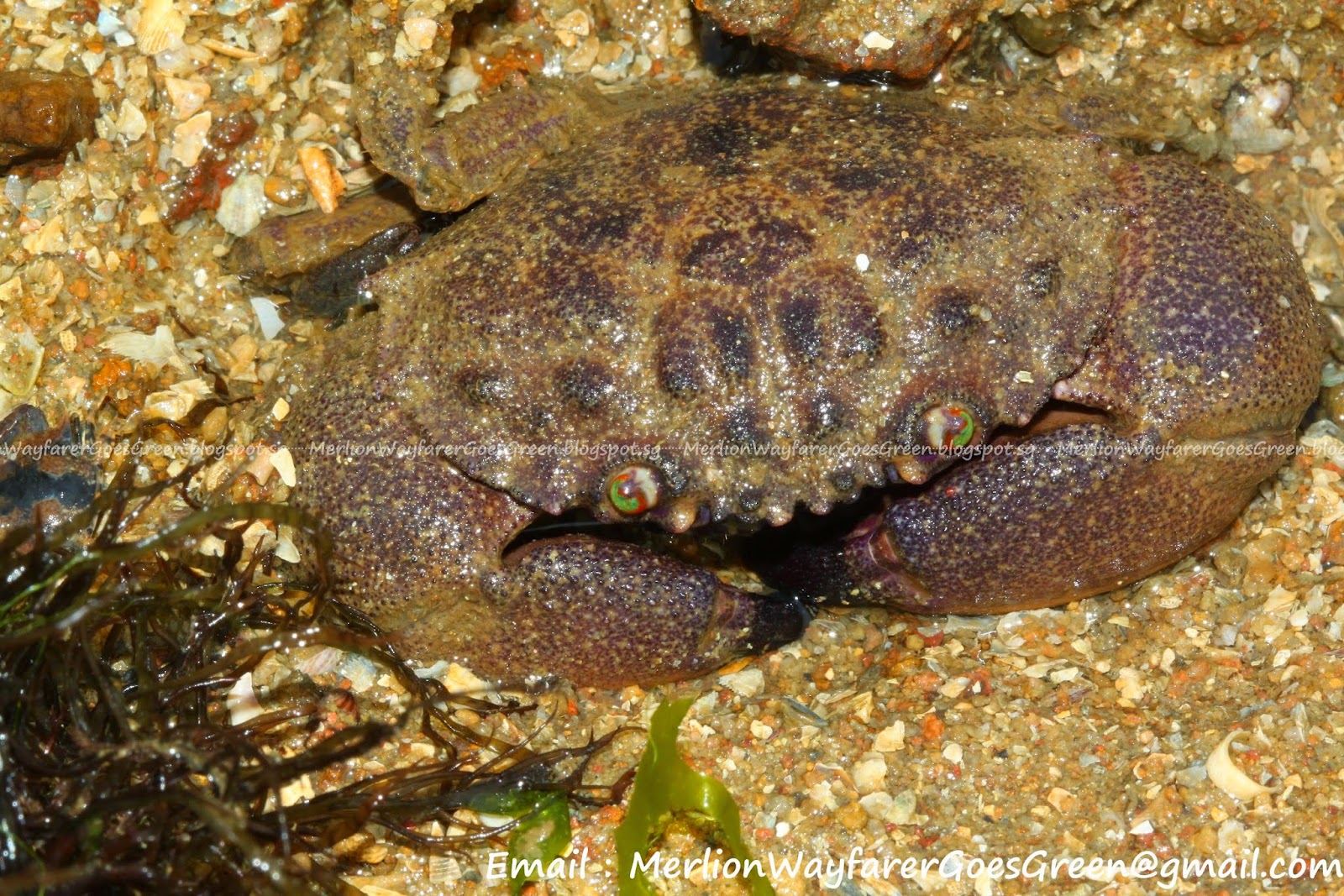
Myomenippe harwicki (Thunder Crab)  

When a stone is overturned, other crabs usually madly dash out helter skelter. The Thundr Crab merely tucks its limbs under its body and remains motionless. In this way, predators overlook it as they focus instead on the more nervous crabs.

"Mini-Me" Thunder Crabs...

The size compared to an adult's thumb - Its body is the length of the thumb...

The muscularity of its huge pincers...

There are lots of ways to make the crab angry...

Nasty look from the crab when disturbed - as if looks can kill...

Alpheidae (Snapping Shrimp)

This Snapping Shrimp was spotted wandering out of its burrow. It appeared lost. There was no Goby watchdog to keep a lookout. Could it be because the Goby did not survive the polluted waters?


Other Shore Life


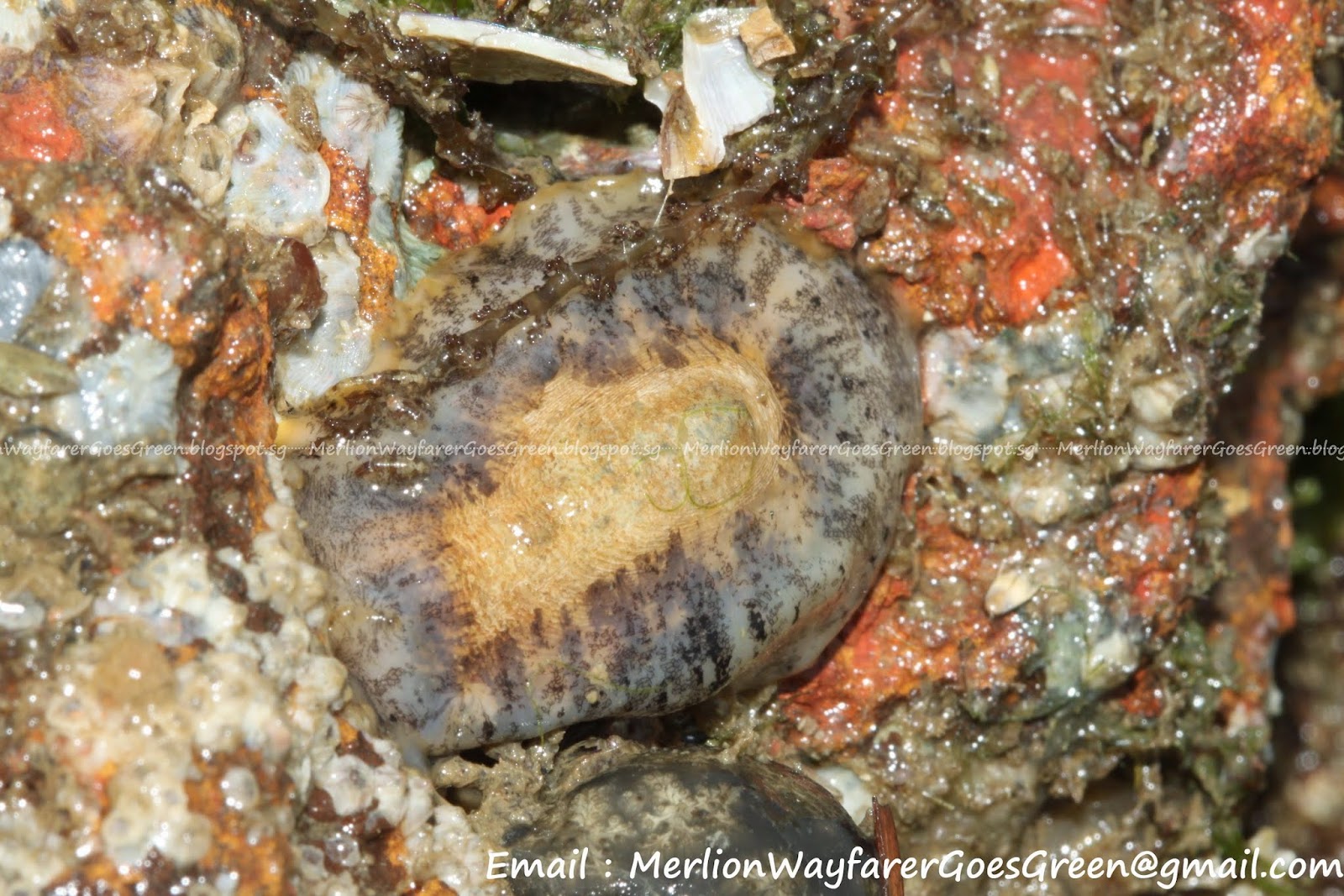
A coin-sized mollusk plastered onto the surface of a rock...

A stubby Aquilonastra coronata (Crown Sea Star)...
 

A deceptively long Eurythoe complanata (Reef Bristleworm) spiraling out of its burrow...

The Land Creatures

On land, due the heavy deforestation, only several creatures were spotted along the regular Park Connector paths.

 An adorable Planthopper (Fulgoromorpha) looking back with its "crossed eyes"...

A female Hasarius adansoni (Adanson's House Jumper) Spider devours its freshly-caught prey...