The Flying Saucer At Sunset

Lenticular clouds (Altocumulus lenticularis) are stationary lens-shaped clouds with a smooth layered appearance that form in the troposphere, usually above mountain ranges. One was spotted in Singapore recently...

Eyes Of 30,000 Honeycombs

With 30,000 individual facets, dragonflies have the most number of facets among insects. Each facet, or ommatidia, creates its own image, and the dragonfly brain has eight pairs of descending visual neurons to compile those thousands of images into one picture...

A Kaleidoscope Of Colours, Shapes And Patterns

Spectacular and innovative in design, the Flower Dome replicates the cool-dry climate of Mediterranean regions like South Africa, California and parts of Spain and Italy. Home to a collection of plants from deserts all over the world, it showcases the adaptations of plants to arid environments...

Lightning Strikes, Not Once, But Many Times

Unlike light, lightning does not travel in a straight line. Instead, it has many branches. These other branches flashed at the same time as the main strike. The branches are actually the step leaders that were connected to the leader that made it to its target...

Are You My Dinner Tonight?

A T-Rex has 24-26 teeth on its upper jaw and 24 more on its lower jaw. Juveniles have small, sharp blade-shaped teeth to cut flesh, whereas adults have huge, blunt, rounded teeth for crushing bones. Is the T-Rex a bone-crushing scavenger?

City Square Mall - Singapore's First Eco-Mall

City Square Mall
Kitchener Road, Singapore
June 2013

Last weekend, Merlion Wayfarer participated in the "Go Eco, Get Crafty" eco-crafts workshop organized by Panasonic and OMY.sg. It was held at Singapore's First Eco-Mall, City Square. Merlion Wayfarer hadn't been to that many "eco-malls", so she was curious to explore the features of this very special mall that makes it eco-friendly.
   

City Green
  

City Square was the first mall in Singapore to be integrated with an urban park. Named City Green, the 49,000 square feet park is a green carpet laid out in front of the mall to welcome visitors. It provides children with a learning experience about ecology and the natural environment.


Contained within City Green, the Living Maze is a maze formed by a series of hedges - for running, hiding and exploring. Sensors help to ensure that the landscaped greenery will not be watered on rainy days, to eliminate water wastage.


Eco-Playground
   

On the grounds of City Square is an environmentally-friendly playground made of wood sourced from forest product producers certified by the Forest Stewardship Council (FSC), a certification system that promotes responsible forest management worldwide. 


Facade & Structure
   

Shaped like a leaf to harmonize with the environment and its green theme, the Green Roof is designed with environmentally-friendly features such as solar panels and a rain water harvesting system.


The low-E double-glazed facade glass optimizes day lighting. 


LED lighting for the facade reduce energy savings of up to 50% compared to conventional lighting.


An energy-efficient fan measuring 7.32m in diameter provides a naturally-cooled environment for activities held in the Fountain Square.
(One reason why Merlion Wayfarer wasn't perspiring much during the Workshop!)


The roof with its natural skylight allows natural lighting to pass through. There are also sensors at the roof to regulate electrical lighting and motorized sunshades to control light coming through from the glass panels.


The mall’s air conditioners use Variable Air Volume technology to moderate the mall’s temperature while saving energy. Together with other energy efficient features around the mall, an estimate of more than 12 million kWh of electricity is saved and 6,000 tonnes of carbon dioxide emission is reduced annually. Condensate water from the air-conditioning system is also recycled, saving enough water to fill 2 Olympic-sized pools yearly.

Recycling bins are provided at convenient locations on every floor for shoppers. Tenants too, have their own set of recycling bins at Recycling Points.


Wet and dry refuse are separated at the mall for recycling through a twin chute pneumatic waste disposal system.

Facilities

 
Installed in the eco-restrooms are waterless urinals and water sub meters to detect water leaks and monitor water consumption. Together with other water efficient featrues, it is estimated that 10 Olympic-sized pools of water annually are saved.


City Square has an electric-car ready carpark with charging stations and dedicated carpark lots for hybrid cars. There are driveway sensors to adjust the lighting of the car park at B4, saving about 50,000 kWh of electricity a year.


Awards & Accolades
   

Some of the awards this unique eco-mall had garnered include:
  • 3R Packaging Awards 2011: Distinction Award
  • 2011 ASEAN Energy Awards: First Runner-up for the Energy Efficiency Competition (New and Existing Category)
  • BCA Awards 2007: BCA Green Mark Platinum Award
  • BCI Asia Awards 2011: FuturArc Green Leadership Award 2011 for Commercial Architecture

Good job, City Square Mall!


The full album is available at:

Haze Is Here - Hide In Aircon?

Singapore
18 June 2013
Hazy

"PSI reading hits 155, air quality plunges to 'unhealthy' for first time in almost three years... at 10pm, the three-hour PSI was 155 - the highest since September 1997 when it reached 226. The last time the haze hit such levels was in 2006, when the PSI peaked at 150... Given the hazy conditions, the NEA has everyone else should limit prolonged or heavy outdoor activities." (TODAY, 18 June 2013)


(Source : TODAY)

The recent haze has made temperatures sweltering. With Singapore's PSI hitting 155 yesterday at 2200 hours, it's no wonder that more people are staying indoors.

Marina Bay today, where neither the port nor MBFC was visible...

A few posts on Merlion Wayfarer's Facebook revealed that people are rushing home earlier, not OT-ing, keeping their windows shut and turning on their aircons.

Merlion Wayfarer is no exception. From less than 2 hours of aircon usage per evening (a "necessity" as her West-facing house is like a sauna in the evenings), her usage skyrocketed to more than 10 hours, including dinner time.

Is this the correct solution for our planet?

Hardly. 

Chlorofluorocarbons (CFCs) have widespread domestic and commercial refrigeration applications, for example, split system air conditioners. They have been found to pose a serious environmental threat. Studies undertaken by various scientists during the 1970s revealed that CFCs released into the atmosphere accumulate in the stratosphere, where they had a deleterious effect on the ozone layer. Stratospheric ozone shields living organisms on Earth from the harmful effects of the Sun's ultraviolet radiation; even a relatively small decrease in the stratospheric ozone concentration can result in an increased incidence of skin cancer in humans and in genetic damage in many organisms. In the stratosphere the CFC molecules break down by the action of solar ultraviolet radiation and release their constituent chlorine atoms. These then react with the ozone molecules, resulting in their removal. CFCs have a lifetime in the atmosphere of about 20 to 100 years, and consequently one free chlorine atom from a CFC molecule can do a lot of damage, destroying ozone molecules for a long time.

(Source : The Ozone Hole)

According to the Energy Market Authority (EMA), the electricity tariff for households is 26.70 cents per kWh (with effect from 01 April to 30 Jun 2013).

At this rate, an air-conditioner which consumes 800 W per hour and will cost approximately 43 cents for every 2 hours, or $12.816 per 30-day month.

Electrical consumption ($) = Rate x Time x Cost = 800/1000 x 2 x 0.2670 = 42.72 cents

In actual fact, this means, Merlion Wayfarer will be using $48 of power on air-conditioning alone to cool just one room this month. Uh-oh...
(Source : Quark Soup)

Merlion Wayfarer is stepping out of her house more today - 
to enjoy the air-conditioning in public spaces and reduce her carbon footprint in a small way.


(Source : Twin Oaks Computing)

For a list of hide-out locations, see "PSI 401? - Merlion Wayfarer's Guide To Hiding Out".
  

Sources

Megabugs Return! - Marvel At The Small Things In Life

Science Centre Singapore 
Jurong East, Singapore
June 2013

Singapore’s largest exhibition on insects, Megabugs Return! officially opened at the Science Centre Singapore (SCS) on 19 April 2013. Megabugs Return! is organised in partnership with Cityneon Events, P’ART1 Design and MediaCorp VizPro International and is held as a curtain raiser for Singapore Science Festival 2013.

The Megabugs Return! exhibition is on from 20 April 2013 to 18 August 2013. This exhibition aims to demystify the fear people have with insects by creating unique experiences for us to understand and appreciate these tiny creatures. The SCS first conceived Megabugs twenty years ago in 1994; since then, it has undergone chrysalis and reemerged with an updated exhibition filled with 14 animatronic insect machines as compared with 11 previously.


“Insects are all around us and they often get neglected with our preoccupation with modern comforts living within a sanitised bubble. This exhibition makes us stop and marvel at the small things in life, literally. Mother Nature made a multitude of insects with intricate details leading interesting lives.
It is time for humans to take a step back and relook at the splendour of insects.” 
- A/Prof Lim Tit Meng, Chief Executive, Science Centre Singapore

Wise words, indeed. This weekend, Merlion Wayfarer looks forward to seeing these bugs that she spotted in her nature treks in their mega-sizes and knowing more about them!


Tickets are priced at $16 (adult) and $13 (Child, 3 – 12 yrs old).
For more information, visit www.megabugs.sg.

|   "Facing The Super-Sized"   |   "Science For The Young And Young-At-Heart"   |
 

More photos are available on Merlion Wayfarer Goes Green's Picasa at :
Places - Science Centre

Sources

  • "Megabugs press kit" (12 June 2013), Science Centre Singapore.
     
  • "MEGA EXHIBITION ON INSECTS COMES TO LIFE ONCE AGAIN!". Media Release (19 April 2013), Science Centre Singapore.

50 Years Of Greening Singapore

Singapore
17 June 2013

After personally experiencing what 50 years of deforestation can do to the landscape ("Deforestation - Sichuan's Mountains, Mountains, Mountains"), at the other end of the Asian land mass, Merlion Wayfarer is glad to hear that Greening Singapore is celebrating its 50th anniversary this year.

Former Prime Minister, Mr Lee Kuan Yew, had a vision to make Singapore a distinctive and attractive place to live in. In 1963, he planted a Mempat tree at Farrer Circus, signifying the start of Singapore's greening campaign. 


Over the decades, various species of flowering trees and plants were introduced to beautify city Singapore. More parks and park connectors were developed, and they gradually evolved into quality green spaces with a wide range of amenities for the community to enjoy. What's encouraging is that the parks are not merely cemented gardens with some trees and flowers but green spaces with natural elements woven into their very structures. (Kudos, NParks!)


Yesterday, Minister Mentor Lee planted a rain tree at the Holland Village Park, continuing an unbroken 50-year tradition.

(Source : Straits Times)

This is one such momentous moment that made Merlion Wayfarer proud to be part of Garden City Singapore.


Sources

Deforestation - Sichuan's Mountains, Mountains, Mountains

Sichuan, China
March-April 2013

Merlion Wayfarer was recently on a trip to the mountainous regions in Sichuan, China.

Before going there, she didn't know much about Sichuan, other than there are "a lot of mountains" there. It was only during the bus journeys that she grew to appreciate the skills of the drivers there. (Her harrowing experiences are detailed in "Treacherous Mountain Roads - Is Your Life Worth 100 RMB?")

The true nature of Sichuan mountains:
  • Surfaces with vertical drops...
  • Mountain roads with wire meshes holding the loose stones on the cliffs together to protect vehicles travelling on the roads...
  • A lot of evidence of landslides - not just pebbles, but rocks too...
  • Loose shale, a lot of it on the roads...
  • Roads which crumble away into the valleys below...
  • Valleys with fallen rocks and boulders, some changing the path of the flow of rivers...

Imagine the resulting devastation from an earthquake in such an area...

(Source : Boston University)

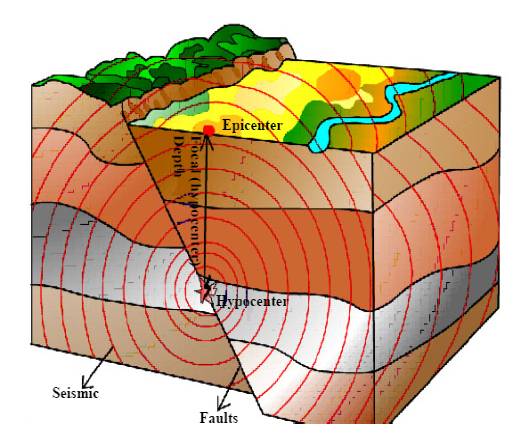
Plate tectonics formed the Longmen Shan Fault, which runs north-easterly under the Sichuan mountains. It is a thrust fault which runs along the base of the Longmen Mountains in Sichuan province in southwestern China. Motion on this fault is responsible for the uplift of the mountains relative to the lowlands of the Sichuan Basin to the east. Both the 2008 Wenchuan earthquake and the 2013 Ya'an earthquake occurred along this fault.

Other than the mountainous terrain and the geological nature of the surface, another reason for the resulting devastation from earthquakes here is due to massive deforestation.  

In many parts of Sichuan, mountains are bare - Clumps of tree stumps dot rocky hills, sticking out like patchy stubble on an otherwise denuded landscape. Deforestation has taken a toll here, leaving local people and an abundance of wildlife increasingly pressed for the resources they need to survive. 


This is a stark contrast to protected regions like the UNESCO sites ("The Fairyland Of Lakes Made From Wind And Clouds") within the region.


Her tour guide explains why...

China is one of the world’s biggest timber producers, importers and exporters.  One result of China's rapid economic growth has been the massive expansion of the timber trade, which has been growing by over 110% annually for the past few years.

Deforestation was sparked by the rush to industrialize in the 1950s and 60s. Because of its central location, Sichuan became a prime wood source for the furnaces that sparked China’s meteoric development. Through the 1980s and 90s, state-run forestry agencies were designed not to preserve trees but rather profit from their harvesting. 

Deforestation has many negative effects on the environment. 

  • The most dramatic impact is a loss of habitat for millions of species. Seventy percent of Earth’s land animals and plants live in forests, and many cannot survive the deforestation that destroys their homes.

  • Deforestation also drives climate change. Forest soils are moist, but without protection from sun-blocking tree cover they quickly dry out. Trees also help perpetuate the water cycle by returning water vapor back into the atmosphere. Without trees to fill these roles, many former forest lands can quickly become barren deserts.
      
  • Removing trees deprives the forest of portions of its canopy, which blocks the sun’s rays during the day and holds in heat at night. This disruption leads to more extreme temperatures swings that can be harmful to plants and animals.
       
  • Trees also play a critical role in absorbing the greenhouse gases that fuel global warming. Fewer forests means larger amounts of greenhouse gases entering the atmosphere - and increased speed and severity of global warming.

Do not await a natural calamity before taking action.
Protect the greens today.
    

Related Reading

Sources