The Flying Saucer At Sunset

Lenticular clouds (Altocumulus lenticularis) are stationary lens-shaped clouds with a smooth layered appearance that form in the troposphere, usually above mountain ranges. One was spotted in Singapore recently...

Eyes Of 30,000 Honeycombs

With 30,000 individual facets, dragonflies have the most number of facets among insects. Each facet, or ommatidia, creates its own image, and the dragonfly brain has eight pairs of descending visual neurons to compile those thousands of images into one picture...

A Kaleidoscope Of Colours, Shapes And Patterns

Spectacular and innovative in design, the Flower Dome replicates the cool-dry climate of Mediterranean regions like South Africa, California and parts of Spain and Italy. Home to a collection of plants from deserts all over the world, it showcases the adaptations of plants to arid environments...

Lightning Strikes, Not Once, But Many Times

Unlike light, lightning does not travel in a straight line. Instead, it has many branches. These other branches flashed at the same time as the main strike. The branches are actually the step leaders that were connected to the leader that made it to its target...

Are You My Dinner Tonight?

A T-Rex has 24-26 teeth on its upper jaw and 24 more on its lower jaw. Juveniles have small, sharp blade-shaped teeth to cut flesh, whereas adults have huge, blunt, rounded teeth for crushing bones. Is the T-Rex a bone-crushing scavenger?

Showing posts with label Urban. Show all posts

Lower Peirce Reservoir - Monkeys Basking In The Sun

Lower Peirce Reservoir
North, Singapore
March 2015

On the fringes of the forest, this is a common sight - A pack of Macaca fascicularis (Long-Tailed Macaque) basking in the sun. Being a complete family unit, the pack consisted of the alpha male, several females, and young, some of whom were still carried by their mothers.

Oblivious to the danger, a jogger runs by with her young child in a pram.
She stops to point out the "cute monkeys" to her toddler...

In a Straits Times report ("Monkey see, monkey do: 5 monkey hot spots in Singapore"), Upper Thomson was listed as a "monkey spot". Residents reported incidents where monkeys smashed their flower pots, gnawed through water containers, upset pots of plants and stole fruit from the trees they planted.

Most macaques are non-aggressive, as long as they are not threatened and food is not carried in front of them. Once past the danger post by them, a regular visit to Lower Peirce Reservoir is always a treasure trove of small finds.

A curious female Telamonia festiva (Jolly Telamonia) peers from bneath a leaf...

A moth caterpillar balances itself at the edge of the stem...

This bug is big - With legs extended, it was almost the size of a human palm...

If you see a beetle with bright yellow spots on its back but much larger in size than a typical ladybird beetle and having a slightly more elongated body, it may be a fungus beetle. Fungus beetles, as the name implies, are affiliated with fungus. However, they are not always seen on fungus as they do fly around and land on some other surfaces. They belong to the family Endomychidae, commonly called Handsome Fungus Beetles.

The Lower Peirce version of Eumorphus quadriguttatus (Handsome Fungus Beetle)...

A male Tyriobapta torrida (Treehugger) Dragonfly from Libellulidae family. They are found in forest swamps and near waterways, guarding small territories in shaded areas...

A juvenile Argiope (St Andrew's Cross Spider) resting in a dark corner...

A cheeky Chrysilla lauta (Elegant Golden Jumper) Male Spider glaring back...

A grasshopper-like Cicadellidae (Leafhopper) resting in a very prominent location with the colour contrast...

March is certainly the spiderling season with lots hatching. On the web, dew drops can be seen collecting in big puddles...

A delicate damselfly rests by the water edge...

An Ampullariidae (Apple Snail) slowly gliding along a stalk...

A parting tribute to Mr Lee as the skies turned dark with rain clouds...

Sources


A Walk On The Butterfly Trail

Butterfly Trail
Orchard Road
Central, Singapore
February 2012

Conceptualized by Nature Society (Singapore), the Butterfly Trail @ Orchard features some 50 of the more common butterfly species that can be found in Singapore. This 4 km trail meanders all the way through the Orchard Corridor between the Singapore Botanic Gardens and the Tanglin area and the Singapore Management University and Fort Canning Park. 

It was a time to be carefree...

Delias Hyparete Metarete (Painted Jezebel) , Pieris Canidia Malayica (Cabbage White) , 
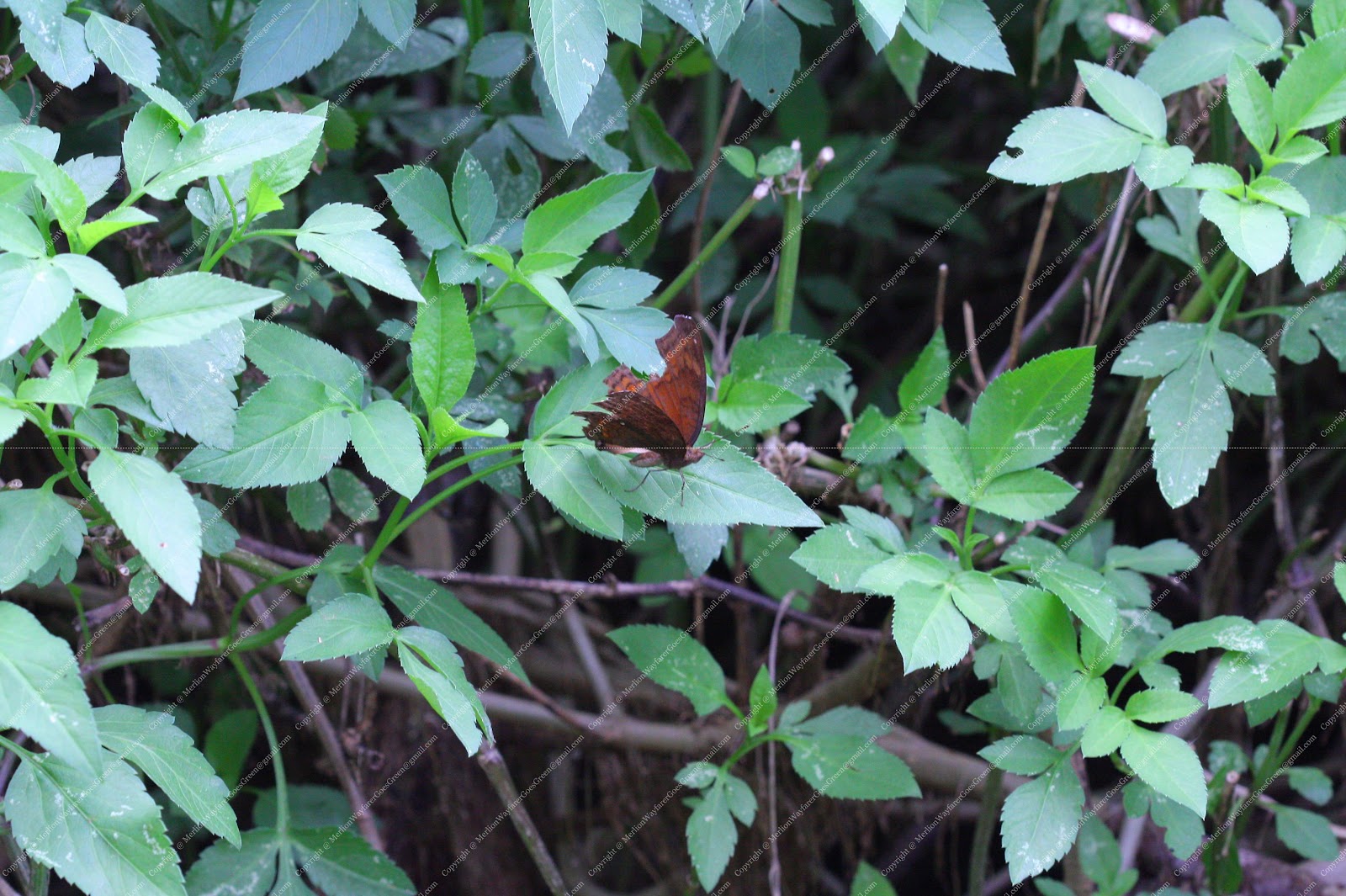
Doleschallia Bisaltide (Autumn Leaf)

A time to make new friends amidst the competition...
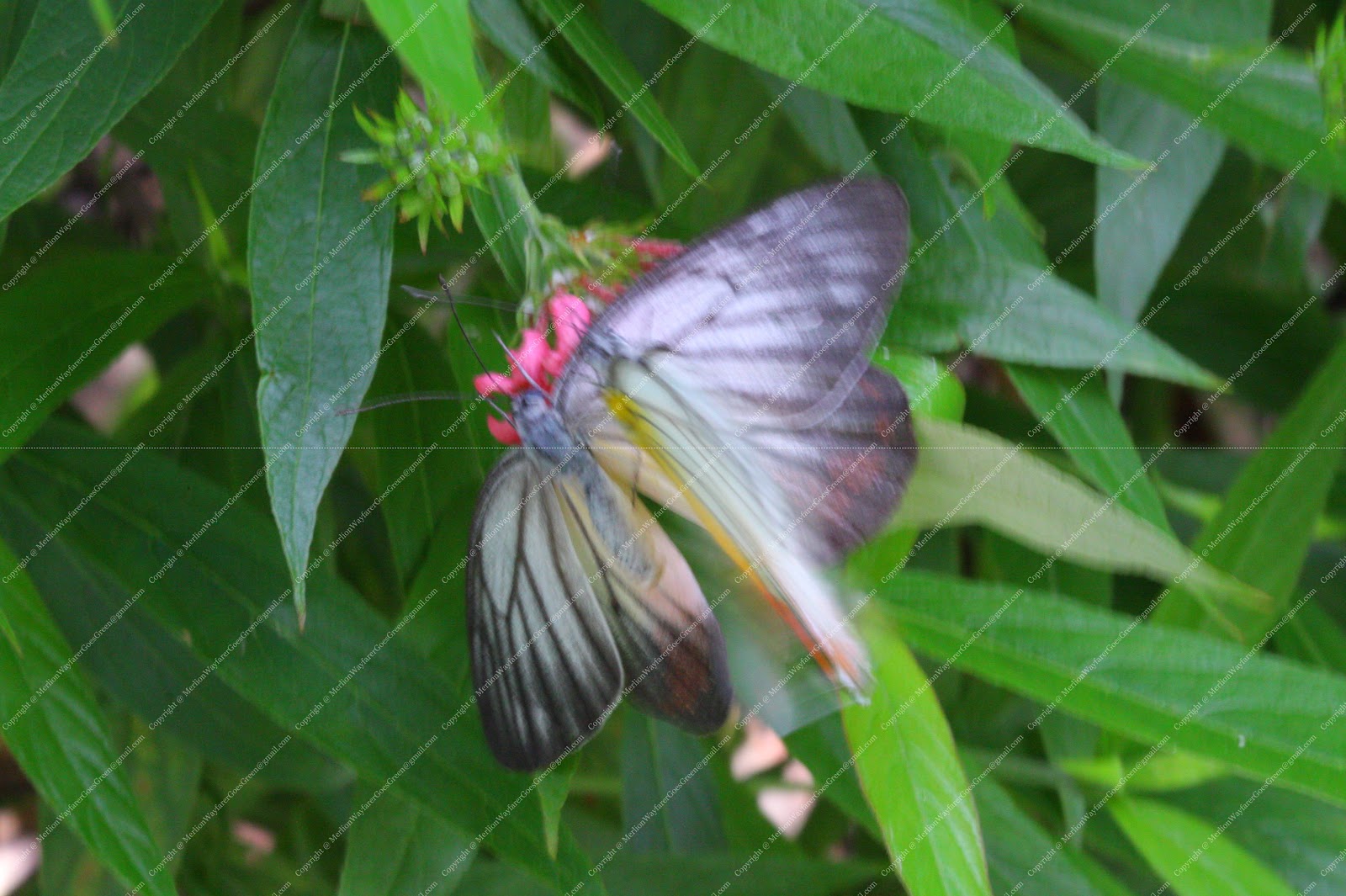
Delias Hyparete Metarete (Painted Jezebel)

And be together...
Chilades Pandava (Cycad Blue , Plains Cupid)

Resulting in hundreds of thumb-sized caterpillars in the heart of town!
 
Doleschallia Bisaltide (Autumn Leaf) Caterpillar

 So that one may grow up to be free again...

Danaus Chrysippus (Plain Tiger)


More photos are available on Merlion Wayfarer Goes Green's Picasa at :
Lepidoptera - Rhopalocera (Butterflies)

Sources

Hello Moon Halos!

Singapore
August 2013

There were two rainbow-tinted rings around the moon last night. - TWO!


The rings that encircled the moon arose from light passing through six-sided ice crystals high in the atmosphere. These ice crystals refract, or bend, light in the same manner that a camera lens bends light. The crystals have to be oriented and positioned just so with respect to your eye, in order for the halo to appear. The ring has a diameter of 22° , and sometimes, a second ring, 44° diameter, forms. 

Thin high cirrus clouds lofting at 20,000 feet or more contain tiny ice crystals that originate from the freezing of super cooled water droplets. These crystals behave like jewels refracting and reflecting in different directions. Cloud crystals are varieties of hexagonal prisms, (6 sides) and range in shapes from long columns to thin plate-like shapes that have different face sizes.

(Source : Keith's Moon Page)

That’s why, like rainbows, halos around the sun - or moon - are personal. Everyone sees their own particular halo, made by their own particular ice crystals, which are different from the ice crystals making the halo of the person standing a short distance away. 

Hmmm that explains why, despite Singapore's small size, 
a moon halo in Changi may not be visible by someone staying in Jurong...
(Source : NEA)

Folklore has it that a ring around the moon signifies bad weather is coming. It is believed that the number of stars within a moon halo indicate the number days before bad weather will arrive. 

Ok, there were zero stars around the two halos.

A while later, the sky completed cleared up and the craters on the moon can be seen clearly.


So how can rings around the moon be a predictor of weather to come? The ice crystals that cover the halo signify high altitude, thin cirrus clouds that normally precede a warm front by one or two days. Typically, a warm front will be associated with a low pressure system which is commonly referred to as a storm.

True enough, this was the sky this morning...


With this weather forecast for the next 12 hours...

(Source : NEA)


More photos are available on Merlion Wayfarer Goes Green's Picasa at :
Natural Phenomena - Clouds and Natural Phenomena - The Moon


Sources


Saturn In The July Night Sky

Singapore
28 July 2013

Two planets appear in the July evening sky all month long: Venus and Saturn. Venus beams in the west at dusk, and sets roughly one and one-half hours after sunset all month long at mid-northern latitudes. Saturn shines moderately high in the south to southwest at nightfall and stays out all evening long. 

Saturn reached opposition in late April, and now it slowly heads towards its conjunction with the Sun on November 6. Look for it in the southwest as evening twilight fades, to the upper left of Spica and farther lower left of Arcturus. A small telescope will reveal Saturn's system of rings which span 40 arcseconds, surrounding a disk about 17 arcseconds in diameter. The rings are tilted 18° to our line of sight, the widest open they have been since 2006.

The planet's ring system is unique, and quite unlike the obscure rings of Jupiter, Uranus and Neptune. Six major rings all lying in the equatorial plane of Saturn have been identified, of which three, in addition to the Cassini division and a subtler demarcation called the Encke division, can be seen from the Earth with a good telescope.

Saturn's rings are made up of many small particles, all moving round the planet in the manner of tiny moons. There is no mystery about their composition; they are made primarily of water ice.

Merlion Wayfarer spotted a very bright pale yellow dot in the sky. 
At 15x zoom, a white ring can be seen around it...


More photos are available on Merlion Wayfarer Goes Green's Picasa at :
Natural Phenomena


Sources