The Flying Saucer At Sunset

Lenticular clouds (Altocumulus lenticularis) are stationary lens-shaped clouds with a smooth layered appearance that form in the troposphere, usually above mountain ranges. One was spotted in Singapore recently...

Eyes Of 30,000 Honeycombs

With 30,000 individual facets, dragonflies have the most number of facets among insects. Each facet, or ommatidia, creates its own image, and the dragonfly brain has eight pairs of descending visual neurons to compile those thousands of images into one picture...

A Kaleidoscope Of Colours, Shapes And Patterns

Spectacular and innovative in design, the Flower Dome replicates the cool-dry climate of Mediterranean regions like South Africa, California and parts of Spain and Italy. Home to a collection of plants from deserts all over the world, it showcases the adaptations of plants to arid environments...

Lightning Strikes, Not Once, But Many Times

Unlike light, lightning does not travel in a straight line. Instead, it has many branches. These other branches flashed at the same time as the main strike. The branches are actually the step leaders that were connected to the leader that made it to its target...

Are You My Dinner Tonight?

A T-Rex has 24-26 teeth on its upper jaw and 24 more on its lower jaw. Juveniles have small, sharp blade-shaped teeth to cut flesh, whereas adults have huge, blunt, rounded teeth for crushing bones. Is the T-Rex a bone-crushing scavenger?

Megabugs Return! - Facing The Super-Sized

Science Centre Singapore 
Jurong East, Singapore
June 2013


The day that Merlion Wayfarer looked forward to has finally arrived. (See "Marvel At The Small Things In Life".) On a warm weekend afternoon, she stepped into the Science Centre and found her way to the Annexe.

Pausing at the entrance to MegaBugs Returns!, she took a deep breath. What will she expect to find?


In she goes into the Warp Tunnel...

And emerges the size of a 20-cent coin where the world of bugs is revealed to her...

Curious ants swarmed around her, feelers twitching - some were milling around bits of biscuits and donuts left behind by some careless humans, others were protecting their nests...

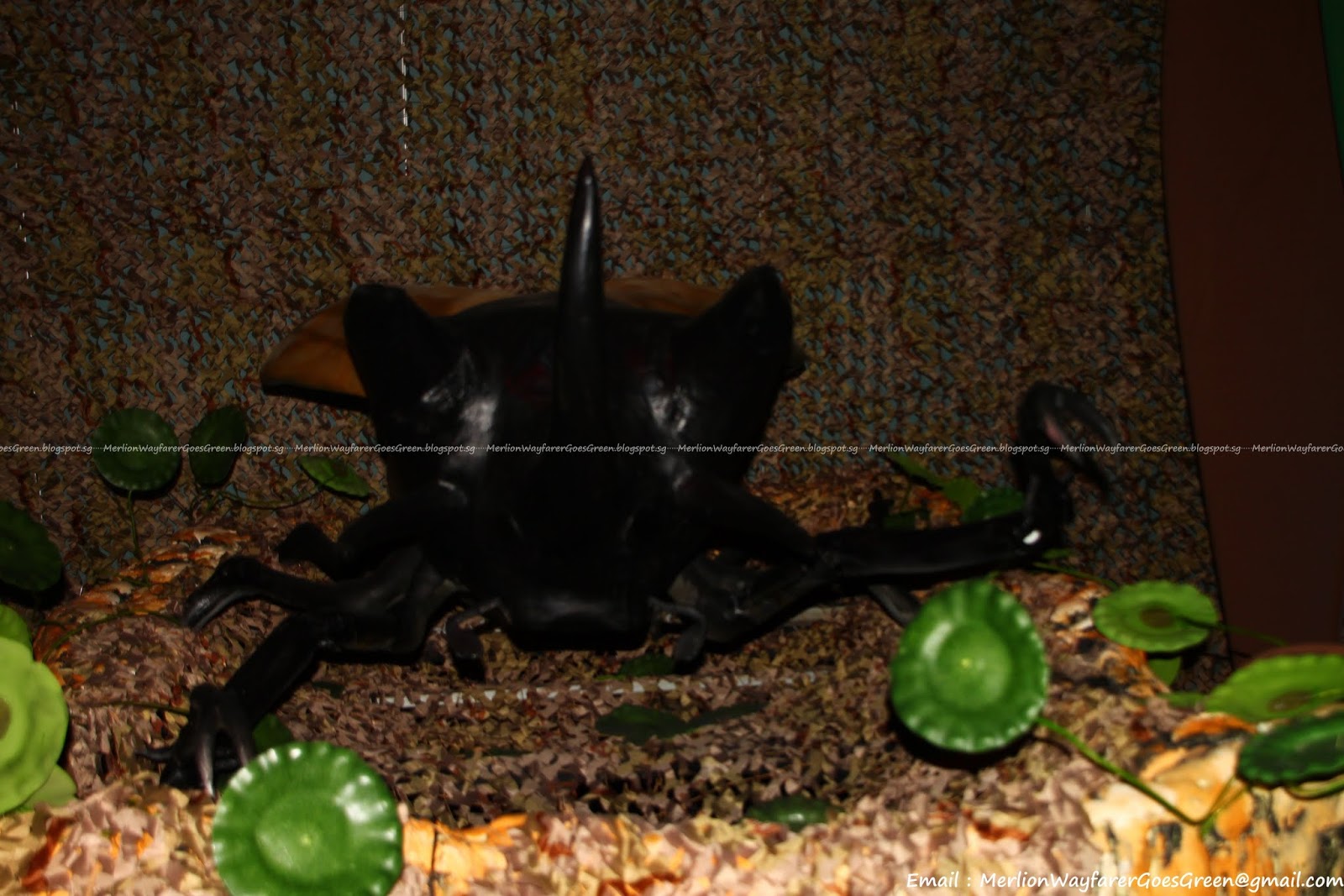
Mere steps away stood a gigantic Rhinoceros Beetle - its single horn glinting menacingly in the light. Although it usually uses this horn when fighting other males, Merlion Wayfarer is not taking her chances with this one!
What's that smell? It's actually coming from these beetles which have rolled some feces into a ball! These balls are used as a food source or breeding chambers...

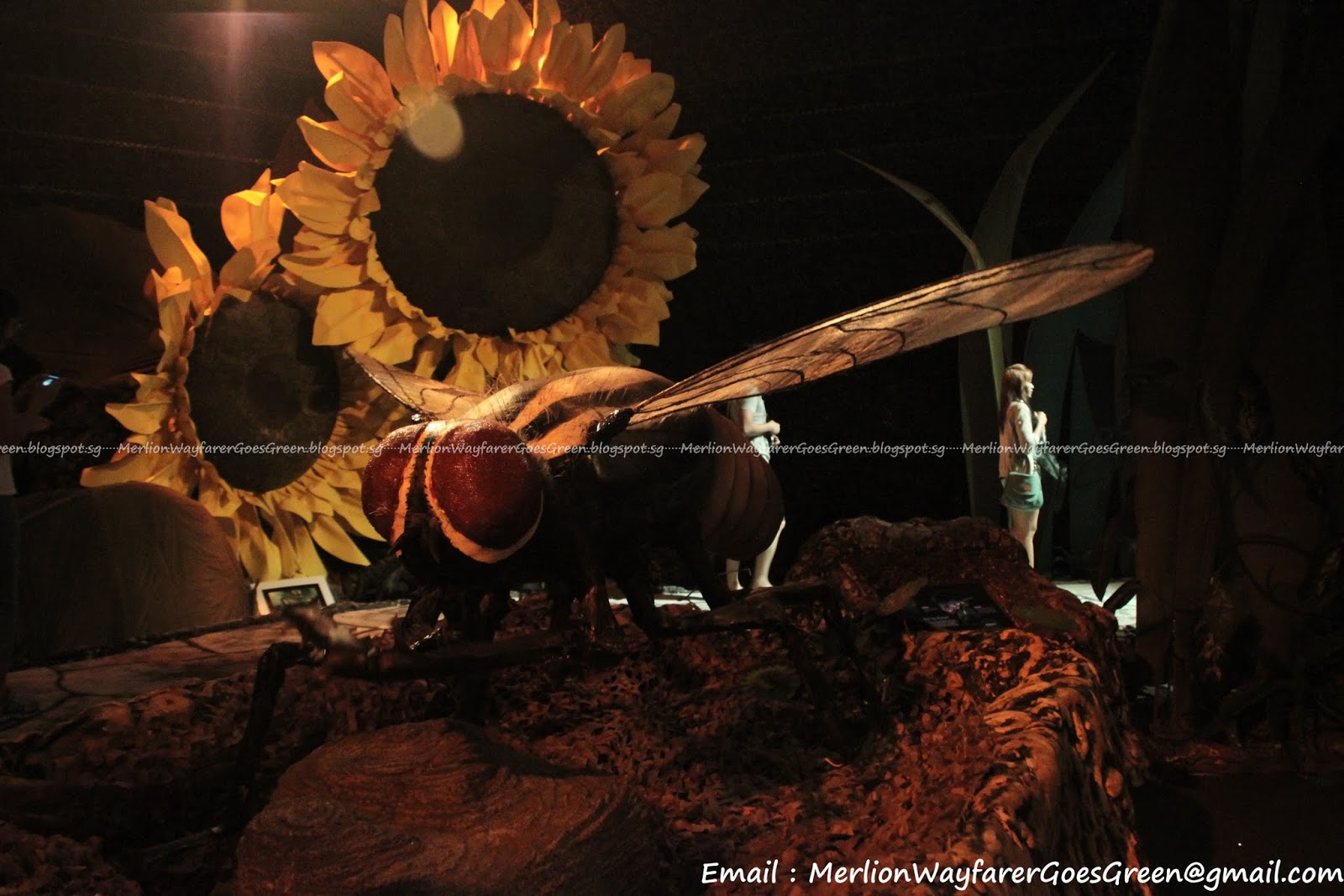
Hey look! Why is that dragonfly moving in this weird way?

Merlion Wayfarer learnt that like all insects, dragonflies are technically ectotherms. That does not mean that they are at the mercy of Mother Nature to keep them warm or cool. Dragonflies that patrol (fly back and forth, versus those that tend to perch) will fire up their wings, using a rapid whirring movement to warm up their bodies. Perching dragonflies rely on solar energy for warmth, but position their bodies skillfully to maximize the surface area exposed to the sun's rays. Some even use their wings as reflectors, tilting them to direct the solar radiation toward their bodies. Conversely, during hot spells some dragonflies will position their bodies to minimize sun exposure, and use their wings to deflect the sun.

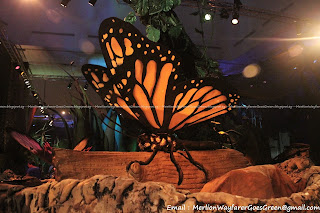
Look what's resting on some logs - A Monarch Butterfly on one side and a Common Rose a short distance away. Monarchs are famous for their migration patterns which last longer than the lifetime of a single generation...
 
A boy exclaims in surprise - Look at that human over there! She is even smaller than a housefly...
  
Watch out! There is a ferocious centipede on the loose! It looks headed for...
 
An angry scorpion! They must be headed for the housefly as dinner!

The snail watches the scene calmly, gliding by and leaving a trail of slime in its wake...

Nearby, on a blade of grass, a praying mantis is watching a grasshopper...
(To see the life cycle of a praying mantis, catch "Bugs! 3D – A RainForest Adventure", 
a documentary of the fascinating universe of insects magnified up to 250,000 times their normal size where a single raindrop can be as big as whole pond.)

What's this - A giant can of insecticide!

It must be used for spraying household pests like this American Cockroach...
 
And this mosquito...

And yes, the Aedes Mosquito with its striped legs can cause dengue (as this boy pointed out) 
so do keep your home free of stagnant water...

Stand off with a bee... Luckily it's not the side with the sting...

Taking a short break underneath the shelter of some leaves, Merlion Wayfarer spotted a few little humans enjoying some fun activities...

  • Pretending to be a fly on the wall...


  • Adding colours to ladybirds and butterflies...

  • Counting how many insects they can spot...
  •  Big humans teaching little humans how to identify insect calls...


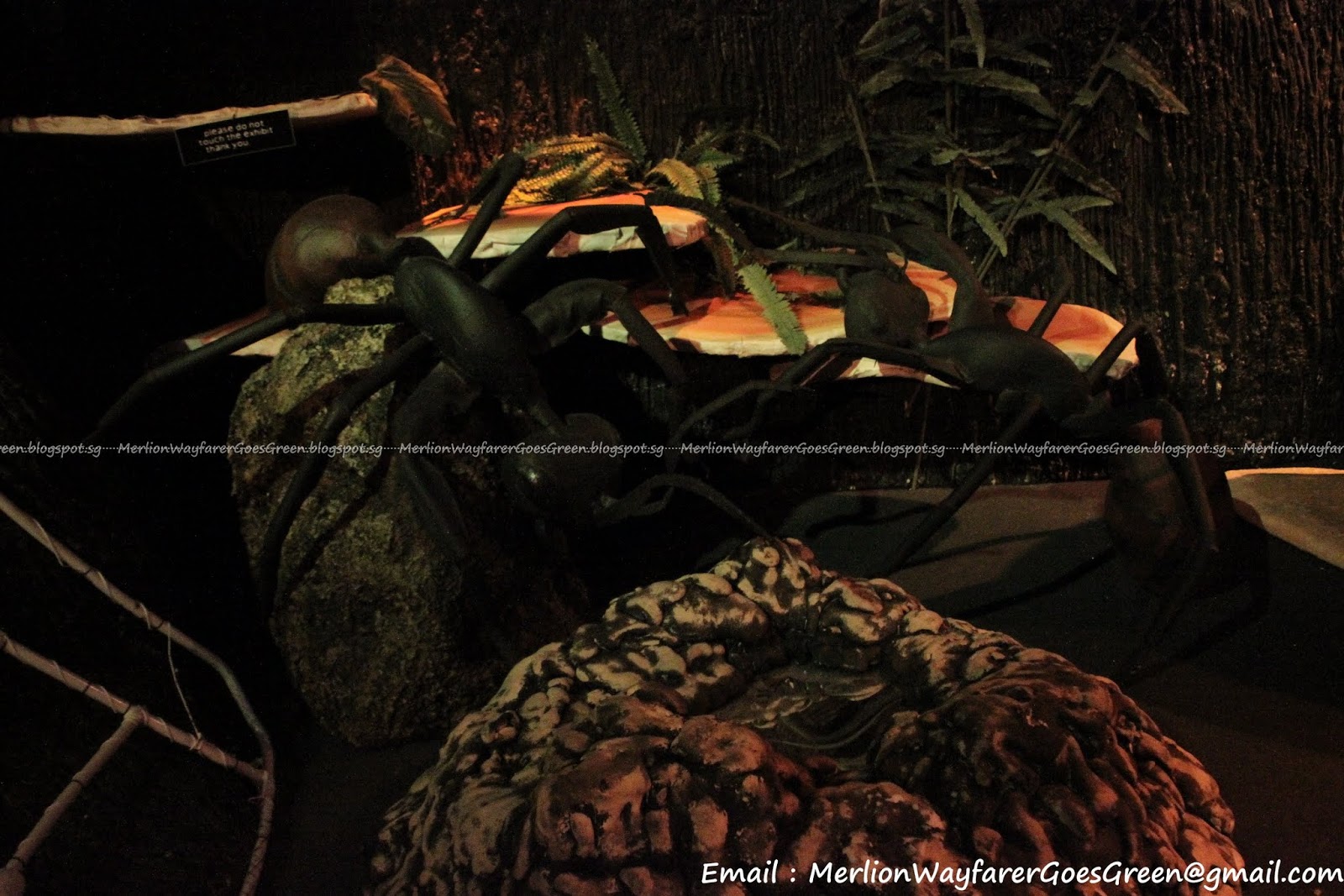
  • Venturing into the cosy nest of a gigantic Singapore Blue Spider and reading Bugs Facts...
  • Learning how bugs communicate and how they can be useful to humans...


  • Figuring how a squirming little "worm" can end up as an insect with wings...
  • Most importantly, finding out what's a "bug" and what are the different types of bugs...

Seeing a light at the end of the tunnel, Merlion Wayfarer ventured into the bouncing forest path, 
her legs sinking knee-deep into the leaves...

With a blinding flash, she was back to her normal size at the Science Centre. What a relief!


She went on to explore the other activities for normal-sized humans outside the exhibition...
  • Good photo opportunities with more bugs - The dung beetle is a popular crowd favourite...
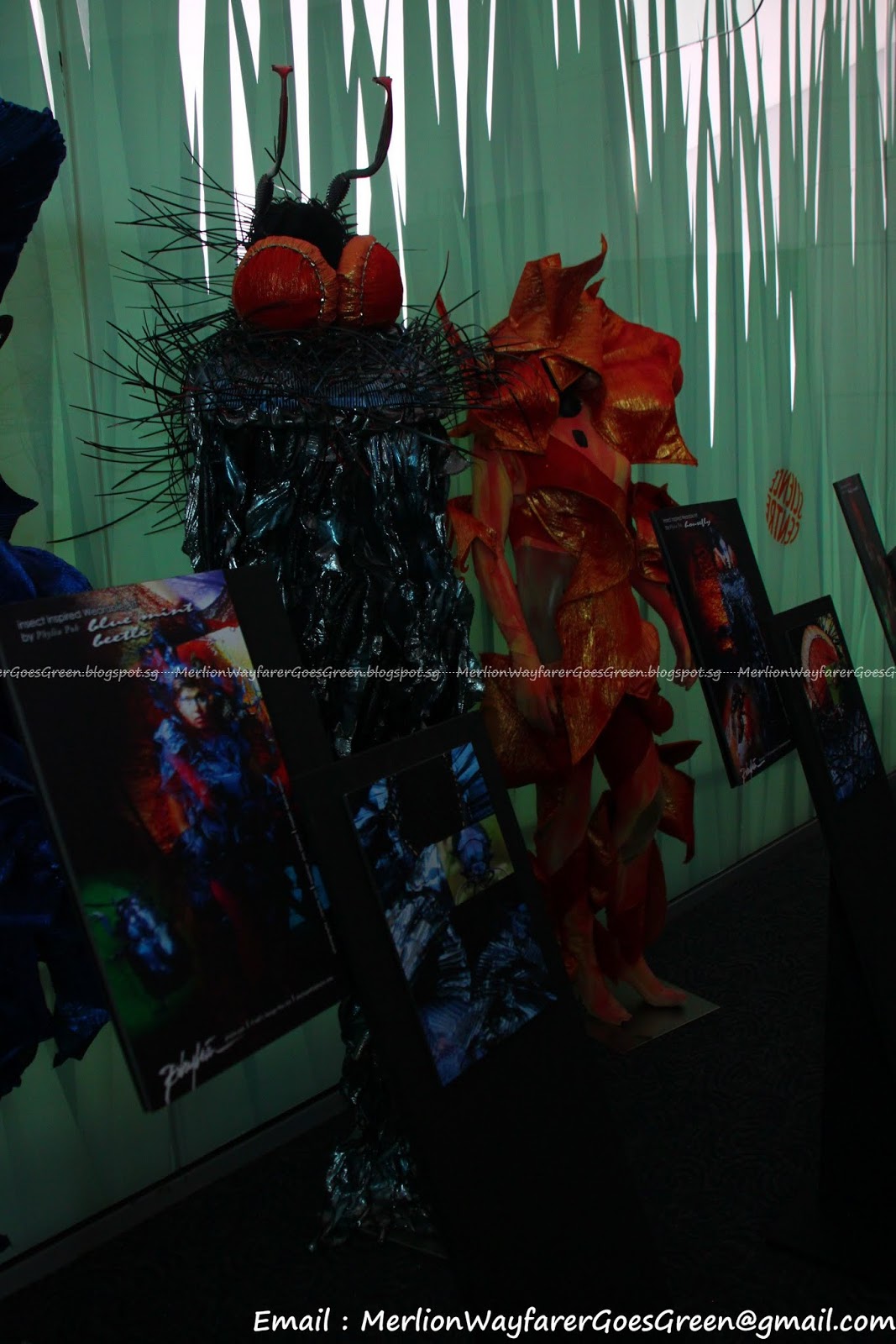
  • Normal-sized humans are able to try on the creative bug costumes designed by students from a secondary school...
  • Other fringe activities include do-it-yourself insect kits, clay-modelling and a studio photo setup...

The sun is setting, better head off home before the insects come alive at night!

Thank you, Science Centre Singapore and Golin Harris!

|   "Marvel At The Small Things In Life"   |   "Science For The Young And Young-At-Heart"   |
 

More photos are available on Merlion Wayfarer Goes Green's Picasa at :
Places - Science Centre


A Hazy Red Sunset

Singapore
June 2013

With the haze came stories about a famed "pink sunset" visible from only certain parts of Singapore. Merlion Wayfarer took out her camera and waited.

This was the "best" shot she had before the sun disappeared behind the horizon...


SG Haze - Low-Cost Odour Removal Without An Air Purifier

Singapore
June 2013
Hazy Hazy Hazy

Having some spare time after completing her blogs for the Singapore Blog Awards, Merlion Wayfarer decided to catch up with her friends. She was on the line with a friend who used to work in the Housekeeping department of a hotel, when she heard about the "secret".

Apparently this hotel used to have smoking and non-smoking floors. In a move to promote non-smoking in their premises (Kudos!), this hotel faced a problem with removing the odour of cigarette stench from their rooms. After all, a hotel can not lease out rooms which are "non-smoking" and have a smoke odour.

(Source : TheOzoneMan)

So this Housekeeper asked around for ideas - friends from the industry, friends who are housewives, mahjong kakis, etc etc etc. And one of her friends shared with her this brilliant idea - to use charcoal.

Merlion Wayfarer read up some websites on this :

Charcoal is carbon. Activated charcoal is charcoal that has been treated with oxygen to open up millions of tiny pores between the carbon atoms.

The use of special manufacturing techniques results in highly porous charcoals that have surface areas of 300-2,000 square metres per gram. These so-called active, or activated, charcoals are widely used to adsorb odorous or coloured substances from gases or liquids. ­

Activated charcoal is extremely effective at odour control. The tremendous surface area of activated charcoal (1 teaspoon = a football field) quickly adsorbs unpleasant scents - not just masks them. So, while other odor control techniques just cover up the smells, activated charcoal actually eliminates them permanently.

Activated charcoal is good at trapping other carbon-based impurities ("organic" chemicals), as well as things like chlorine. Many other chemicals are not attracted to carbon at all - sodium, nitrates, etc. - so they pass right through. This means that an activated charcoal filter will remove certain impurities while ignoring others. It also means that, once all of the bonding sites are filled, an activated charcoal filter stops working. At that point you must replace the filter.

And Merlion Wayfarer questioned her further, "Is the the normal type of charcoal, or the special type?"

She replied simply, "Just ordinary charcoal will do. The BBQ type."

Next question she asked was, "How much do you need for each hotel room?"

"Just 3-4 pieces per room. It will take some time to be effective, maybe several days."

Now charcoal can remove stale cigarette stench, there is no reason why it will not help in absorbing the impurities from the haze. Merlion Wayfarer is game for a try!

She hadn't BBQ-d in ages, so she Googled for the cost of BBQ charcoal - 3kg at S$4.95 from NTUC:


Which is very affordable!

Think about it... despite the severity of the haze this round, if there are no at-risk members in your household, and it's just the "smell" with some mild symptoms, it's really no point getting an expensive air purifier to use only several days a year, right?

Now. Merlion Wayfarer has not tried this method yet. In fact, she is only going to try today. So do try this suggestion with an open mind!  

Oh yes. In case you prefer to use activated charcoal, your expired charcoal pills can be an alternative odour absorber, albeit on a smaller scale.

(Source : Kebun.com)

Sources