The Flying Saucer At Sunset

Lenticular clouds (Altocumulus lenticularis) are stationary lens-shaped clouds with a smooth layered appearance that form in the troposphere, usually above mountain ranges. One was spotted in Singapore recently...

Eyes Of 30,000 Honeycombs

With 30,000 individual facets, dragonflies have the most number of facets among insects. Each facet, or ommatidia, creates its own image, and the dragonfly brain has eight pairs of descending visual neurons to compile those thousands of images into one picture...

A Kaleidoscope Of Colours, Shapes And Patterns

Spectacular and innovative in design, the Flower Dome replicates the cool-dry climate of Mediterranean regions like South Africa, California and parts of Spain and Italy. Home to a collection of plants from deserts all over the world, it showcases the adaptations of plants to arid environments...

Lightning Strikes, Not Once, But Many Times

Unlike light, lightning does not travel in a straight line. Instead, it has many branches. These other branches flashed at the same time as the main strike. The branches are actually the step leaders that were connected to the leader that made it to its target...

Are You My Dinner Tonight?

A T-Rex has 24-26 teeth on its upper jaw and 24 more on its lower jaw. Juveniles have small, sharp blade-shaped teeth to cut flesh, whereas adults have huge, blunt, rounded teeth for crushing bones. Is the T-Rex a bone-crushing scavenger?

Showing posts with label Starfishes. Show all posts

Punggol Beach - Mainly Crustaceans Left

Punggol Beach
North East, Singapore
February 2015

It does seem that crustaceans and a host of smaller organisms survive well despite the pollution on Punggol Beach. (See "Punggol Beach - Polluted & Deforested").

Crabs

Hermit crabs with their pearly bead-sized eyes...

What a beard!

A crab with a bleached claw and another one with a white stripe down its face...

Hairy Crab...

A whole host of other crabs...

Some well-hidden by camouflage or in crevices...

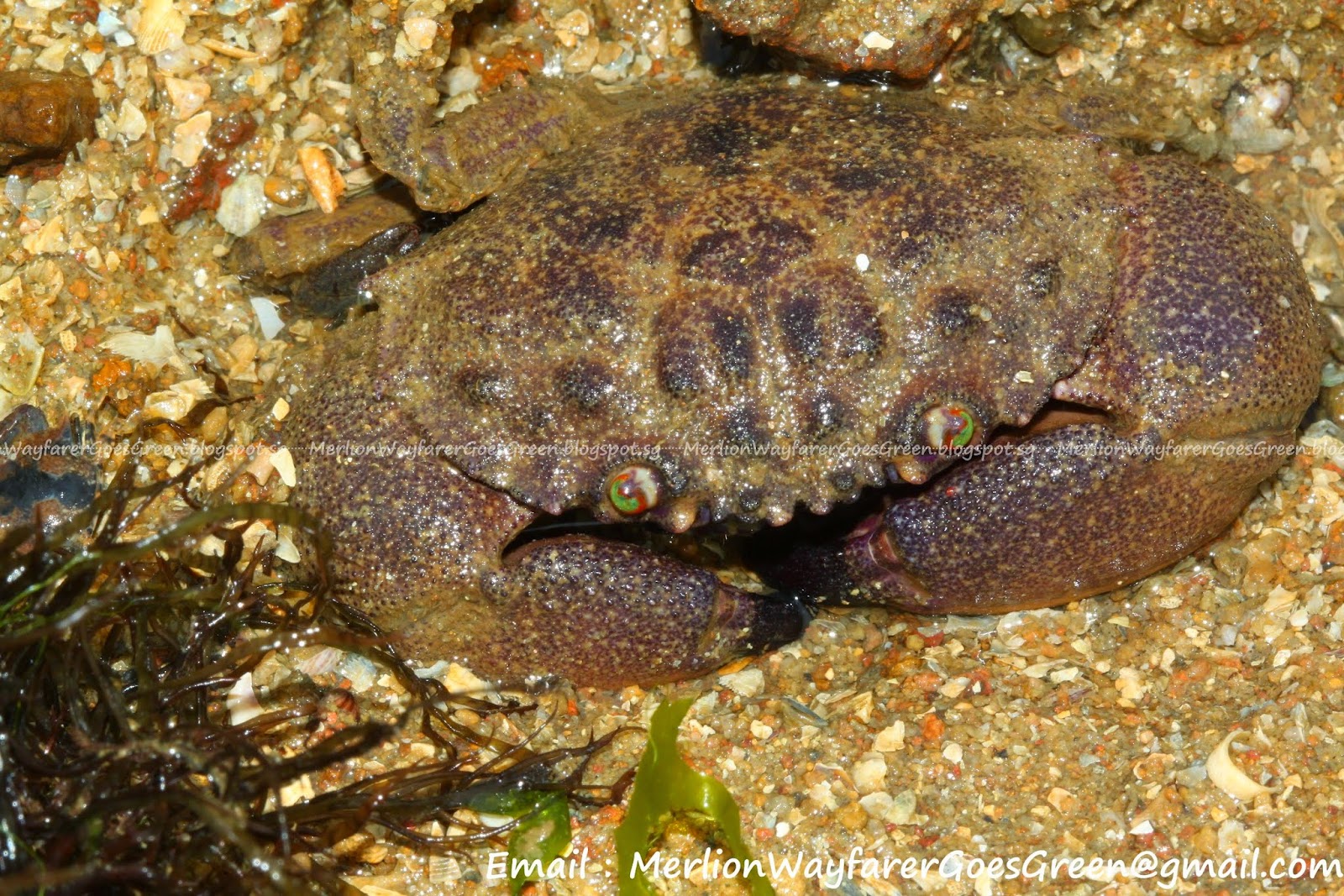
Myomenippe harwicki (Thunder Crab)  

When a stone is overturned, other crabs usually madly dash out helter skelter. The Thundr Crab merely tucks its limbs under its body and remains motionless. In this way, predators overlook it as they focus instead on the more nervous crabs.

"Mini-Me" Thunder Crabs...

The size compared to an adult's thumb - Its body is the length of the thumb...

The muscularity of its huge pincers...

There are lots of ways to make the crab angry...

Nasty look from the crab when disturbed - as if looks can kill...

Alpheidae (Snapping Shrimp)

This Snapping Shrimp was spotted wandering out of its burrow. It appeared lost. There was no Goby watchdog to keep a lookout. Could it be because the Goby did not survive the polluted waters?


Other Shore Life


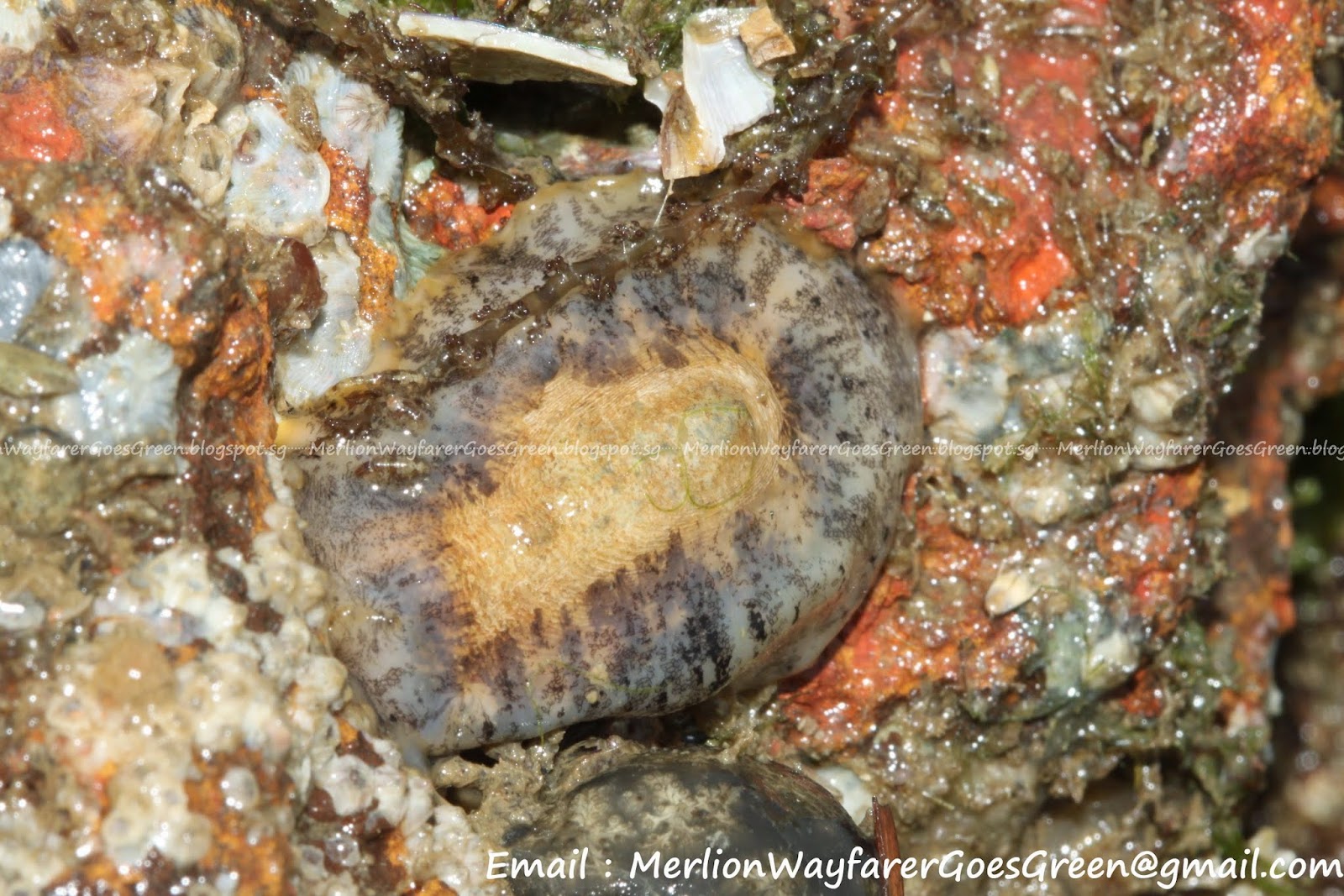
A coin-sized mollusk plastered onto the surface of a rock...

A stubby Aquilonastra coronata (Crown Sea Star)...
 

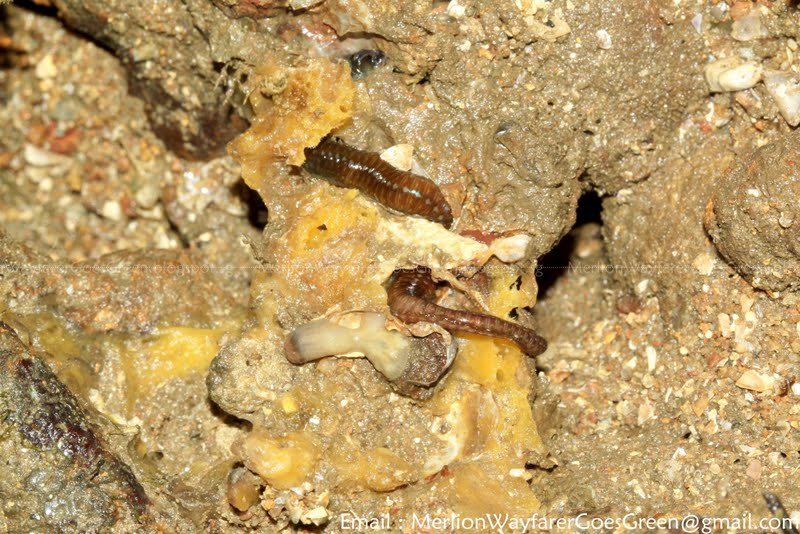
A deceptively long Eurythoe complanata (Reef Bristleworm) spiraling out of its burrow...

The Land Creatures

On land, due the heavy deforestation, only several creatures were spotted along the regular Park Connector paths.

 An adorable Planthopper (Fulgoromorpha) looking back with its "crossed eyes"...

A female Hasarius adansoni (Adanson's House Jumper) Spider devours its freshly-caught prey...


Rock Stars By The Sea

Punggol Beach
North East, Singapore
January 2014

In this little patch of seashore, a single Aquilonastra Coronata (Crown Sea Star, Rock Star) was found. Actually, two, to be exact. But one was floating away and appeared dead. It could have been the victim of inconsiderate beachgoers who were digging out all the living creatures in the sand. (See "Park Visitors At Bukit Timah Hill & Punggol Beach")


More photos are available on Merlion Wayfarer Goes Green's Picasa at :

Sources

Wishing Upon A Star

North-East, Singapore
May 2013

During last month's full moon low tides, Merlion Wayfarer was at the shores...

Beneath small stones, fragile Ophiuroidea (Brittle Star) starfishes roam...

Dull-coloured Actiniaria (Anemones) lay well-hidden...

A Paguroidea (Hermit Crab) with hairy legs in a borrowed shell under a stone peeking out...

Sometimes hiding sentry Cryptocentrus Leptocephalus (Slender-Lined Shrimp-Gobies) 
which watch over the burrows of the Alpheidae (Snapping Shrimps)...
(Read their story on "Nature's Sonic Boooom")

An Oxudercinae (Mudskipper) lies motionless, undisturbed by the actions of the gigantic human watching it...

[Video] These surfaces of several stones were covered by a living organism 
which breathes out little bubbles into the shallow water pools...


More photos are available on:


Low Tide Among The Rocks

North-East Coast
Singapore
January 2013
  
This is low tide at a North-Eastern beach. The shore consists mainly of rocks and stones on a coarse sand bed.
  

And this is a common scene at many of our coastal shores during weekends, including this one - Children exploring the rocks, catching fish, and sometimes running about barefoot at low tide. 


However, sometimes dangers lurk within shores at low tides. All who step onto these waters should have proper footwear (i.e. no flipflops, no slippers) with thick soles.

Here is what Merlion Wayfarer spotted:


There are of course other seemingly harmless creatures which are absolutely fascinating:

Amidst the sand and stones, there is a thriving eco-system. Besides the hundreds (or thousands!) of crabs scuttling about, worms burrow in and out of crevices within the stones. For those not used to the terrain, it can be quite freaky to see a worm head into a hole, and the head of the same worm appear in a second (and even third!) hole with its body still sliding through the first hole!


Surprisingly, starfish can be found among the rubble...
  

A well-camouflaged hermit crab stares back...


And behold the Snapping Shrimp and its ever-steady burrow guard!


The full albums are available at: